In the afterglow of the long-awaited re-release of “Thirst” – the second album by ClockDVA – this feels like a good time to revisit my teenage diaries, to reflect on the recording sessions and share my notes from all those years ago.
Given that the first ClockDVA album “White Souls In Black Suits” was recorded in a day and a bit, having six days to record the follow-up felt positively indulgent. Furthermore, to be travelling away from home to work in a 16-track, residential recording studio with a professional producer had the distinct air of an early brush with the big time.
I believe Rod Pearce from Fetish Records first saw ClockDVA at The ICA in London on June 22nd, which also marked guitarist Paul Widger’s first gig with the band. Earlier in the evening Paul had played his final show with They Must Be Russians, but with just a change of shirt and a sharp haircut between the two sets, he was now stepping up for ClockDVA.
Genesis and Cosey from Throbbing Gristle came backstage after our performance. Fetish had re-released TG’s 1977 Industrial Records debut, “The Second Annual Report”, the following year, and had successfully pressed and sold a further run in 1979. ClockDVA co-founder Adi Newton had a relationship with Throbbing Gristle, which dated back as far as the summer of 1978.
By early July, my diary entries are describing ClockDVA as “Fetishists”, which suggests a recording agreement was close. Rod Pearce was also at the ClockDVA and Vice Versa gig at The Moonlight Club in London on July 17th for further talks. A couple of weeks later I was round at Adi’s flat listening to Fetish releases from the likes of Snatch, W-KGB and The Bongos. The name of producer Ken Thomas came up, together with notes about a trip to Surrey to record.
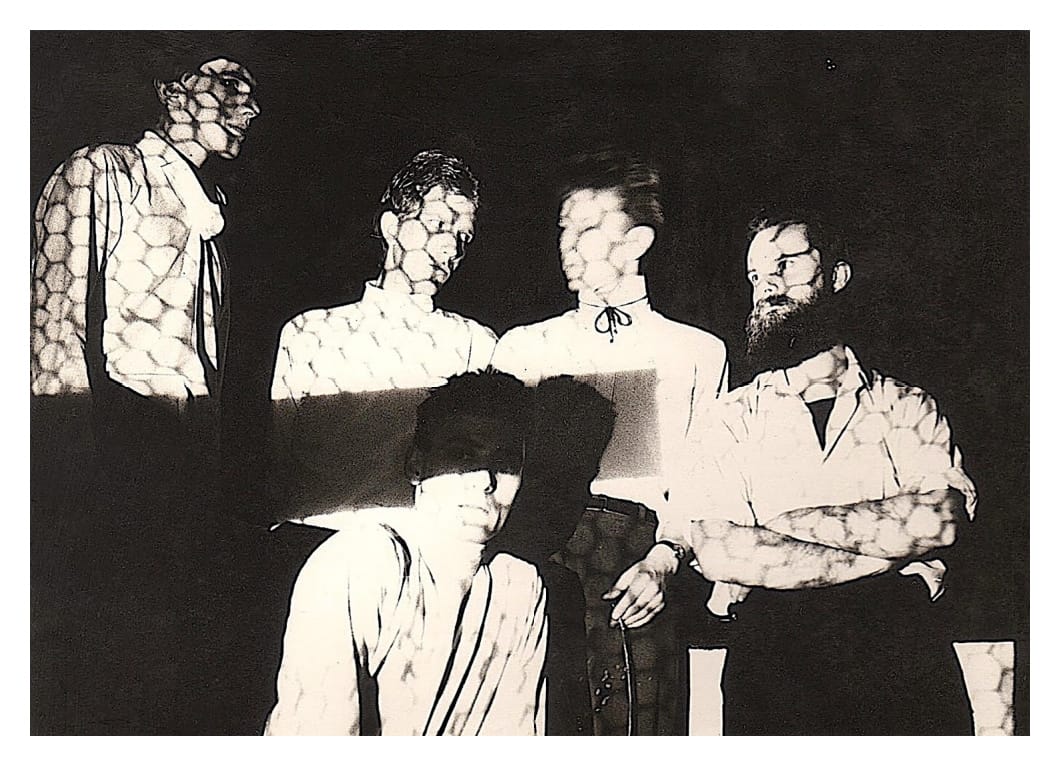
Seven of the nine songs recorded for “Thirst” were played live at the Futurama Festival on September 13th. Both “Moments” and “Impressions of African Winter” were in embryonic form at that stage.
Now read on…
Sunday 28th September 1980. “ClockDVA travel to Jacobs’ Studios at Runwick near Farnham in Surrey to record our album. Unfortunately derv gets into the petrol tank of our minibus. As a consequence of this, we arrive at Rod’s flat in Denbigh Street very late, then push on to Jacobs.”
The day had started on schedule, with just the five of us – Adi, Judd (who was driving), Charlie, Paul and me – in a rented minibus. When we pulled into Scratchwood services on the M1 just north of London to top up the tank, Adi, for the first and only time, volunteered to do the pump duty, but somehow chose diesel instead of petrol. A few miles further on, the van started honking and smoking as the petrol engine got clogged and we sputtered to a halt on the hard shoulder just by Mill Hill. It took three hours for a mechanic from a local garage to come to our rescue, tow us back to Scratchwood and then flush the tank so we could continue on our now not-so-merry way. Finally, we made it to Rod Pearce’s tiny flat in Pimlico, the modest HQ of Fetish Records.
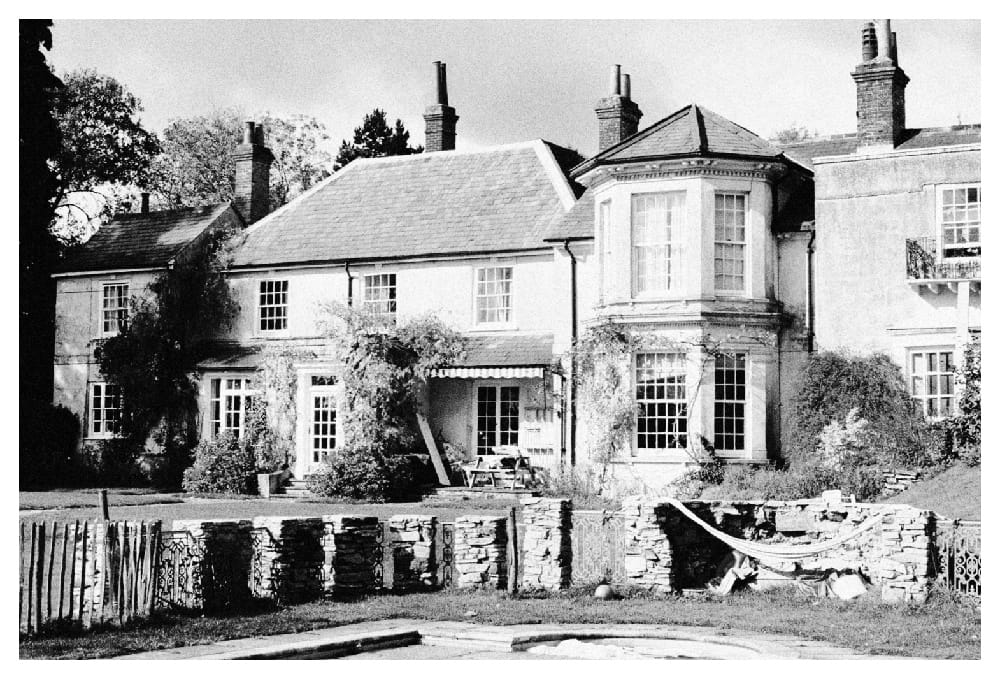
Monday 29th September. “Got up about 7am, the rest of the band strongly disapprove. Nowhere to walk to, the studio is very isolated. Working with Ken Thomas, who is producing us. We recorded backing tracks for “4 Hours”, “Sensorium” and “Blue Tone”, followed by “North Loop”. Then started overdubs.
Up early, I was going to go for a jog only to find we were deep in Martha Reeves country – nowhere to run. We saw a badger on a remote country lane last night. A real, live brock. I’d only ever seen one in the Tufty Club books before that.
I think Rod Pearce had sold Adi on the idea of Ken Thomas producing ClockDVA on the basis that he had worked with David Bowie (Ken would have been a young Tape Op at Trident in London in the early 70s) and had engineered Wire’s classic “Pink Flag” album.
Had Rod mentioned that Ken also had credits on David Essex and Gentle Giant albums, the response might well have been less enthusiastic.
Everyone was happy with a good solid start. Paul Widger recently reminded me that the backing track for “4 Hours” was in fact the first and only take.
Tuesday 30th September. “Yesterday was my birthday, I am now 20. No-one made a fuss, too busy working. A pattern emerges. Rise about midday, work until 4 or 5am. Recorded “Uncertain”, “White Cell”, “Moments”, “Piano Pain” and “African Winter”. More overdubs, worked very late.”
Jacob’s was owned by Andy Fernbach and his wife Fran. Andy was a folk-blues musician who had released a solo album on Liberty Records in 1969. The couple previously had a 16-track studio (Vivatone) in their home. They moved into Ridgeway House, a substantial Georgian farmhouse, in early 1980, to set up their new residential studio. It was named Jacob’s after a breed of sheep that were farmed in the local area.
We were living together, eating together and sleeping in adjacent bedrooms. This would have been the most time we had ever spent together as a band. Everyone was very focused on doing their best possible work in the relatively short period of time we had available. Our cohesion and unity of purpose was remarkable.
Ken teased us with a story that the Ampex tape recorder we were using was the very same one that Mike Oldfield had used for “Tubular Bells”. A mischievous wind-up to keep a group of very earnest young post-punk musicians guessing.
Wednesday 1st October. “All day spent overdubbing. Judd and I have virtually finished. He cannot relax, he acts strange, like a tiger in an unlocked cage. Met Dave Allen from the Gang of Four, mixing live tracks on the RAK mobile for “URGH! A Music War”. Tomorrow we start mixing, the weather is fine.”
I loved watching Paul and Charlie overdub their parts, marvelling at their little nods to each other as they skilfully swapped trills on “Moments”. Then Charlie stacking his horns on the chorus of “4 Hours”, which I felt gave it a Dexy’s-meets-Stax feel. Or hearing Paul’s swampy slide-guitar smears on “Uncertain”. Adi too brought his atonal disruption, with his primitive hammering on “Sensorium” and his 8-track cartridge machine of subversive, invasive sounds on “Piano Pain”, “Blue Tone” and “White Cell”.
I was too young to understand that working non-stop in this off-the-beaten track location might affect Judd negatively. He was used to having some kind of chemical stimulant in his blood stream most of the time. However, that was about to change…
Thursday 2nd October. “Everyone takes an active part in the mixing, even Judd, who wanders into the control room demanding more bass! The sound is bright and strident, with the vocals largely audible. Undecided on a title as yet, possibly “Thirst”.”
Rod from Fetish came down to Jacob’s to check on progress, bringing with him graphic designer Neville Brody’s terrific “war baby” illustration, which would end up being used as the front cover artwork on the album. I remember Rod suggesting “Slo-Mo” as a possible album title. I thought this was a bit too close to Ultravox’s track “Slow Motion”. At one point, back up in Sheffield, the working title for the album had been “Sexual Morality”, but when we saw the juxtaposition of Neville’s striking image and considered the figurative meanings of the word itself, there was a definite swing towards “Thirst”.
Rod also brought some drugs down from London. Remember, I was still so wet behind the ears that they really should have painted a Plimsoll line on my forehead, so when I heard someone say “There’s some Coke in the control room.” I was naively expecting fizzy pop rather than white lines.
Friday 3rd October. “I have sat through the Thames TV telethon and survived! Also watched the fall of Muhammed Ali, unpleasant to see. ClockDVA in the final stages of mixing while U2 dropped in, basically good guys despite the music they make. Time is running out, into the small hours with “African Winter”.”
I wasn’t a fan of U2 at the time. Bono and The Edge were in the RAK mobile outside the main studio, mixing their contribution to the “URGH! A Music War” film. They came into the control room for a listen and were really positive and encouraging. To this day, Bono has the firmest handshake of anyone I’ve ever met. After “Thirst” was released, I received a lovely postcard from The Virgin Prunes saying they were fans, which suggests to me that Dublin’s “Lypton Village” gang were bigger DVA supporters than we imagined.
Much later, with nothing stronger than coffee to sustain me, I sat through the Thames telethon, a live 10-hour marathon hosted by the unflappable Michael Aspel that went on long into the small hours. Also on TV was delayed coverage of Larry Holmes brutally punishing a sluggish and clearly over-the-hill Muhammed Ali.
Saturday 4th October. “Finished around 6am. It sounds like the definitive statement we wanted to make, excellent. Dropped Ken off at Rod’s flat, then headed home. Many hours without sleep until I drift off around 8pm. I think my sense of time is out of sync.”
Judd came up with an inspired percussive bass part for “Impressions of African Winter”, dampening the strings while hitting them with a timpani mallet. Ken then made this hypnotic pattern into a tape loop which formed the foundation of the track. The rest of us then played over the loop, trying to stay in strict time, something that did not come easily to me.
This was the last track we mixed in the hours just before dawn. First light was starting to illuminate the low, wispy mist that had settled on the fields beyond the windows of the control room. All hands on the faders, following Ken’s guidance, working together as a team.
I remember it was a bright sunny day as Judd drove us back up the M1 to Sheffield. Charlie had a cassette of the album that Ken had run off for him, which he was listening to intently on his Walkman. He delivered his verdict somewhere around Toddington services: “That,” said Charlie smiling, “is fucking brilliant!”
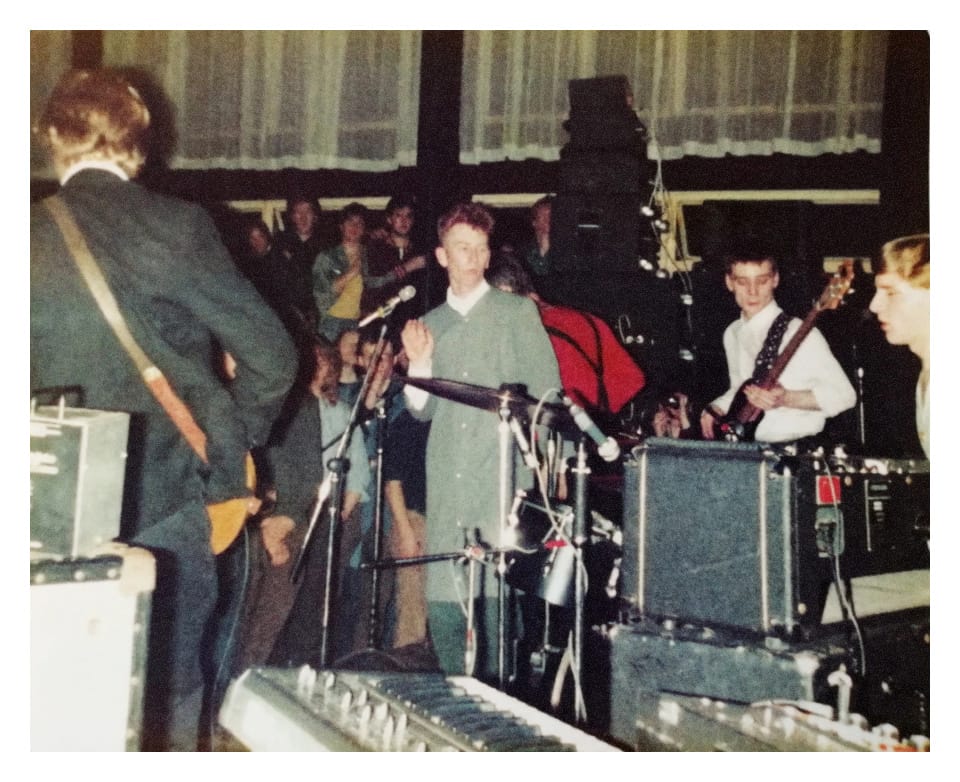
After that, there was some to-ing and fro-ing with some of the mixes. Ken’s first devastating mix of “Uncertain” sadly had to be shelved because the frequency peaks would have made the vinyl skip. Personally, I’ve always felt the released version, while making a fine opener and statement of intent, lacks a little of the immersive Bayou voodoo that we captured in the room on that Tuesday evening.
The album was finally mastered for manufacturing on December 1st and was in the shops on January 23rd 1981. Sixteen days later, ClockDVA played The Fetish Night Out at The Lyceum Theatre in London. Reviewing the gig for the NME, Gavin Martin said: “The revelation of the evening, possibly a lifetime, are ClockDVA: they are going to be the best group in the world.”
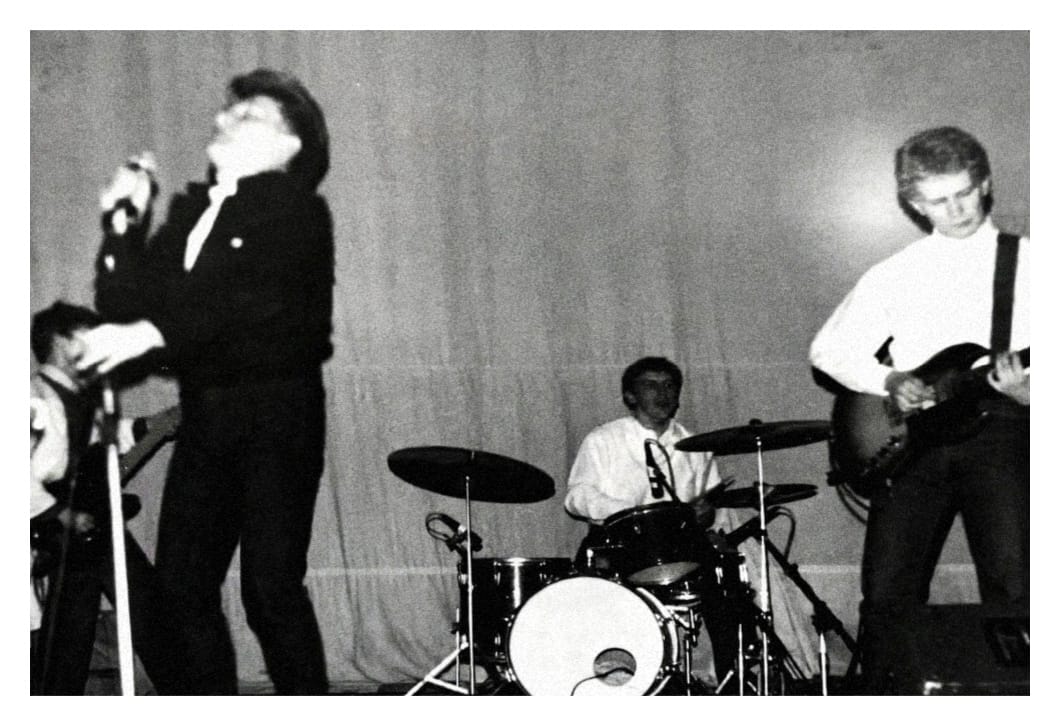
This version of ClockDVA broke up on May 11th 1981.
I was lucky enough to work with Ken Thomas again many years later, when I was A&R on a Gavin Friday album he was producing. When I met him at Dublin airport he said, “I remember you, you’re the drummer.” His later production work for Sigur Ros, M83, Dave Gahan, Mt. Wolf and Maps was never less than stunning. He died in the summer of 2021.